Small Pet Supplies Guide: Rabbits, Guinea Pigs & Hamsters

Short answer: small pets need far more space than traditional cages and hutches suggest. Rabbits and guinea pigs are social and are happiest in pairs or groups with a large enclosure, constant access to good hay, safe hiding places and fresh water, while Syrian hamsters live alone in a large enclosure with deep bedding and a solid wheel. Plan the space first, then add bedding, hay, hides, a water bottle or bowl, toys and a carrier.
Space first: hutches, cages, runs and pens
The Rabbit Welfare Association and Fund recommends that a pair of rabbits has a living area of at least 3 m by 2 m and 1 m high, with a shelter attached so they can choose where to be at any time. A hutch alone is not enough; most owners combine a hutch or indoor pen with a permanently attached run. Guinea pigs need plenty of floor space to run too, and a larger enclosure is always better than a taller one, as they do not climb.
- Indoors: modular pens and large indoor cages work well for house rabbits and guinea pigs. Protect cables and skirting boards, as rabbits chew.
- Outdoors: choose a weatherproof hutch raised off the ground, with secure locks and strong mesh to keep foxes out. In winter, move it out of the wind and rain, add extra bedding, and cover part of the front at night while leaving ventilation.
- Hamsters and gerbils: choose a large enclosure with a deep base so they can burrow; floor space matters more than levels.
Browse our small pet cages, hutches and playpens, including modular pens from SONGMICS. For a step-by-step layout, read our small pet cage set-up basics.
Bedding and litter
Good bedding is absorbent, low in dust and comfortable to dig in. Paper-based bedding is soft and absorbent; dust-extracted wood shavings are also widely used. Avoid scented bedding. Rabbits can be litter trained: put a tray with paper-based litter in the corner they choose, and add hay on top, as rabbits like to eat while they use the tray. For hamsters and gerbils, provide bedding deep enough to burrow into, at least 20 cm in part of the enclosure. Spot-clean daily and do a full clean weekly. See our small pet bedding and litter, including bedding from Kaytee.
Hides and beds
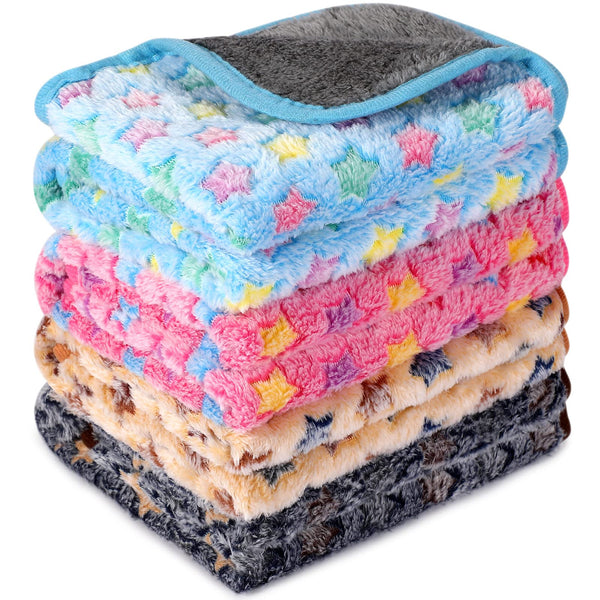
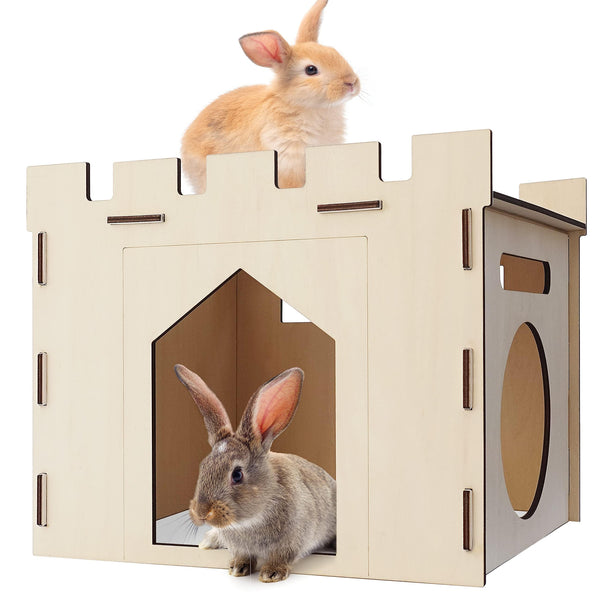
Rabbits, guinea pigs and hamsters are prey animals and feel safest when they have somewhere to hide. Give each animal at least one hide, with two entrances for rabbits and guinea pigs so one animal cannot trap another. Wooden houses, fabric snuggle beds, tunnels and hammocks all work; choose untreated wood or washable fabric. Browse small pet hides, beds and hammocks, including wooden hideouts from Niteangel.
Hay and food
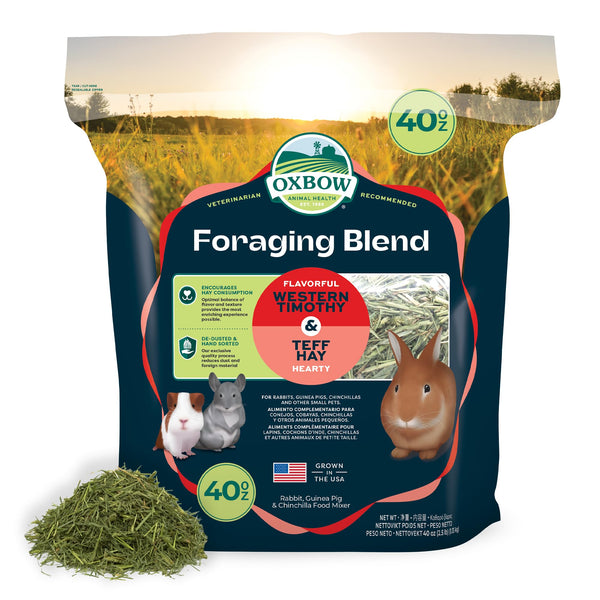
Hay should make up the bulk of a rabbit's or guinea pig's diet, and UK welfare charities commonly advise providing a pile of fresh hay at least as big as the animal every day, so they can graze constantly. Add a measured portion of a species-specific pellet, as rabbit and guinea pig foods are formulated differently, plus a daily portion of suitable fresh greens. Hamster and gerbil foods are seed and grain mixes made for those species. Store hay somewhere dry and well ventilated. See our small pet food and treats, including hay and pellets from Oxbow.
Water: bottle, bowl or both
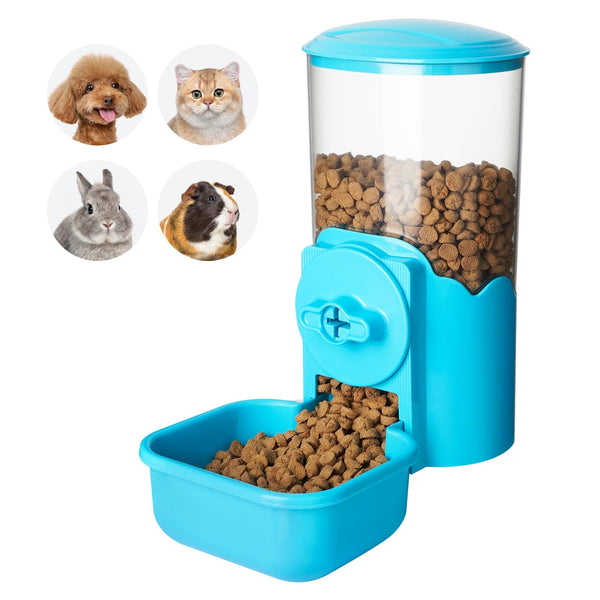
Fresh water must always be available. A drip-free bottle keeps water clean, while a heavy ceramic bowl is a more natural way to drink; many owners offer both. Check bottle spouts daily, and in cold weather check outdoor bottles for ice; an insulated bottle cover helps. Browse small pet water bottles and feeders.
Toys, wheels and enrichment
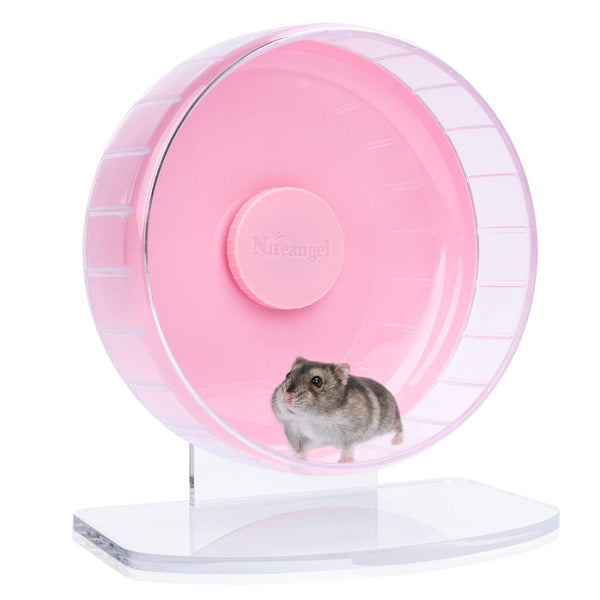
Hamsters, gerbils and mice need a solid wheel large enough to run with a straight back; for Syrian hamsters that usually means 28 cm or more across. Rabbits and guinea pigs do not use wheels but love tunnels, platforms, dig boxes and things to chew, such as willow balls, untreated wood and hay-stuffed toys. Scatter part of the daily food so they can forage. See our small pet toys and exercise wheels.
Carriers: short, calm trips
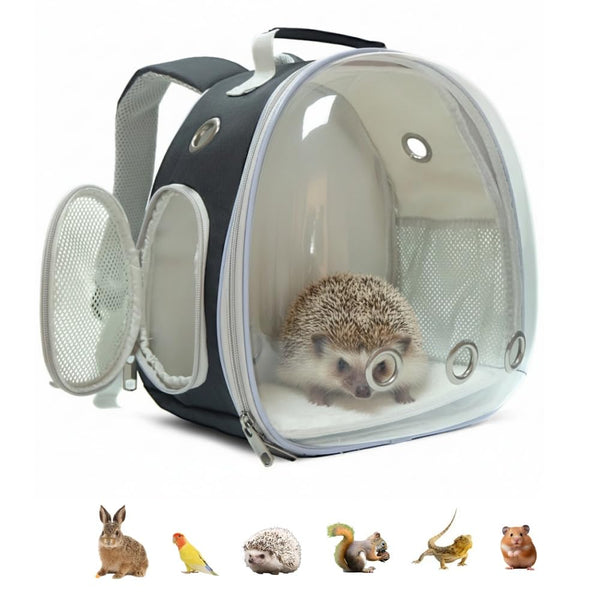
A carrier with good ventilation, a solid floor and a top or front opening makes vet visits and moving house easier. Line it with familiar bedding and a handful of hay, keep it out of direct sun and draughts in the car, and travel bonded pairs together. Browse small pet carriers.
How to choose: a quick checklist
- Plan the space first: for a pair of rabbits, aim for at least 3 m by 2 m by 1 m including the run.
- Keep rabbits and guinea pigs in compatible pairs or groups; Syrian hamsters live alone.
- Choose low-dust, unscented bedding, deep enough for burrowing species.
- Provide unlimited fresh hay plus a species-specific pellet.
- Give every animal a hide, and two-entrance hides for groups.
- Choose a solid wheel of 28 cm or more for Syrian hamsters.
Frequently asked questions
How much space do two rabbits need?
The Rabbit Welfare Association and Fund recommends a living area of at least 3 m by 2 m and 1 m high for a pair of rabbits, with a shelter attached so they can use the whole space at any time.
Can rabbits and guinea pigs live together?
They have different needs and communicate differently, so it is generally recommended to keep each species with its own kind, for example two rabbits or two guinea pigs.
What bedding should I use for small pets?
Choose an absorbent, low-dust and unscented bedding such as paper-based bedding or dust-extracted shavings, and give hamsters and gerbils enough depth to burrow.
How long does delivery take?
Orders are prepared within 1 to 3 working days, and most UK addresses receive them 3 to 7 working days after dispatch. Delivery is free with no minimum spend.
Keep browsing
See everything in our small pets department, read the pet toys and enrichment guide, or explore every category on our shop by category page. Delivery is free across the UK and unused items can be returned free within 30 days; see delivery and returns.